On Meeting Infants – part 1
BY Franklyn Sills
The Fulcrum, Issue 94 January 2025
Birth is one of our most formative experiences, a universal rite of passage that can have significant, lifelong physical and emotional consequences.
My own prenatal and birth experiences were intense. As my mother had lost a son before me, she was constantly anxious and fearful of losing me. Her womb was intense and stressful and I basically had to get out. I was born two months premature and placed in an incubator for a month. I can still remember the bright light; no one touched me in the incubator either. It still affects me to this day.
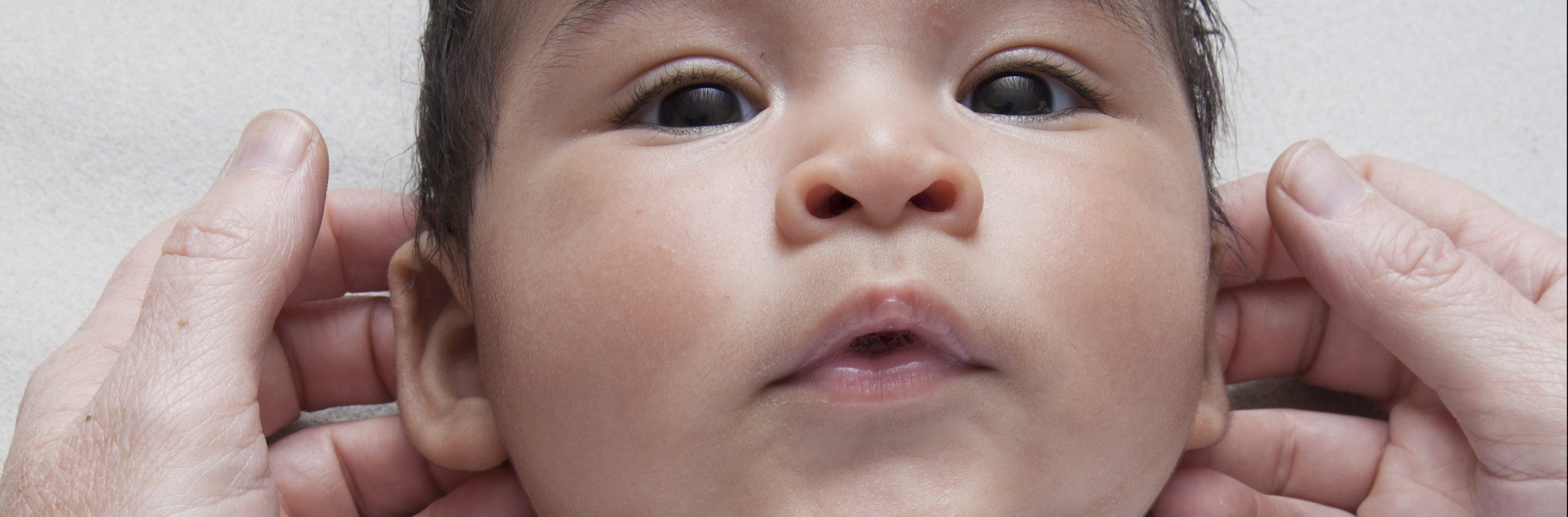
The birth process is central to psycho-emotional, physiological and structural development and patterning – strongly influencing attachment processes and ego development. When we begin to work in this field, it is important to acknowledge that babies are conscious and aware little beings. Conventional medicine’s historical view that babies have little awareness or intelligence was a gross misconception leading to enormous damage. In the past, hospital personnel and parents may have routinely handled babies insensitively and medical procedures may have been administered as if the infant had no awareness and was not affected psychologically or emotionally by them. However, research evidence is overwhelming that babies are highly aware, even as prenates in the womb. They perceive threats, register pain and even comprehend verbal and nonverbal messages with astonishing sensitivity, in some cases even greater than an adult’s.¹
Prenates and birthing infants are conscious, sentient beings who make decisions about their experience and take shape accordingly.
Babies’ emotional and physiological needs for a safe relational field are paramount. They need a holding environment that encourages bonding and secure attachment, where the potential for a deepening trust in the caregiver’s relational field is present. In the birthing process, medical interventions can sometimes be delivered as if these basic attachment needs are not recognised. The subsequent damage and the hidden societal costs of all this can be enormous.² I suspect that a good percentage of infant, child, and adult health issues may be traced to circumstances and events surrounding pre- and perinatal experiences. These effects live on long after the circumstances of the womb experience and birth are forgotten and may manifest as defended personality forms and tendencies in psycho-emotional dysfunction, nervous system sensitivity and activation, as well as in structural issues later in life.³
Working with the impacts of the birth process often invokes issues for the practitioner. This is true for many other therapeutic situations but it is especially relevant when treating babies or when an adult client’s pre- and perinatal processes come to the forefront. The problem is that our own unresolved pre- and perinatal issues may arise. I always recommend that practitioners work with their own early issues to be more able to hold a neutral ground for clients in treatment sessions.
This means a commitment to taking on our own unresolved prenatal and birthing issues and the related forces and psycho-emotional structures still at work in our systems. This can be done with craniosacral sessions, psychotherapy, pre- and perinatal therapy modes or other therapeutic prenate methods. I have done personal work around my own prenatal and birth trauma over the years and have even sensed and worked with my earliest felt-sense experience of conception and implantation. This exploration has been critical in understanding and opening up my personality structure and is an ongoing process. It has also greatly enhanced my ability to empathise with infants and adults and hold a steady, neutral ground with their sometimes intense processes.
Life Takes Shape
It is the nature of life to take shape. We are conscious, sentient, living beings. As we meet our world and have experiences, we tend to take shape in response or reaction to what is experienced. These responses are developmental, psycho-emotional, physiological and structural. So, as we have experiences, we make decisions about them and shape ourselves in response to them.
Over the last thirty years, much evidence has accumulated to show that prenates and infants are aware of their environment and register and respond to their sensory experiences. In this vein, I would like to quote Raymond Castellino DC, from his paper, Somatotropic Facilitation of Prenatal & Birth Trauma:
Evidence is mounting that prenates are sentient, conscious, feeling beings who have much to express to those who receive them into their arms at birth. David Chamberlain PhD, has amply pointed out to us that, at seven weeks, prenates have been observed to be sensitive to touch, and at fourteen weeks prenates have been observed to move away from light sources, even though their eyelids are still closed. At fourteen weeks prenates have clearly responded to sound. Thomas Verny cites cases which more than suggest that language development begins in the womb… David Chamberlain cites other video ultrasound studies where prenates appear to be expressing affection and emotions such as joy, gladness, fear, anger and sadness. Prenatal twins have been observed gently caressing each other in the womb. In another case, a prenate has been observed making a fist and actually hitting the shaft of an amniocentesis needle invading his womb space.4
A wealth of empirical evidence over the last four decades from the field of prenatal and birth psychology also points to the sentience of prenates and newborns. Dr. William Emerson, a dear friend and foremost pioneer in the field, has gathered voluminous evidence over a forty-year career in his regression work with clients and with direct work with infants that point to this conclusion. I have had the privilege to work and collaborate with Emerson and Castellino, and I can confirm their observations from both my personal and clinical experience. In my work with infants, it is clear to me that they respond directly to the practitioner’s quality of presence, understand what is said and communicated to them and will express their needs to you, if you are open to their communications. Emerson writes about the prenate in a similar manner:
The prenate (i.e., the unborn baby) is vulnerable in a number of ways that are generally unrecognized and unarticulated. Most people think or assume that prenates are unaware and seldom attribute to them the status of being human. I recall a recent train trip where an expectant mother sat in a smoking car filled with boisterous and noisy people. I asked her whether she had any concern for her unborn baby and whether she thought the smoke or the noise would be bothersome to her unborn child. Her reply was, “Well of course not, my dear. They are not very intelligent or awake yet.” Nothing could be further from the truth…. theory and research from the last twenty years indicate that prenatal experiences can be remembered and have a lifelong impact. 5
There is no longer any doubt that newborns must be related to as sentient, aware beings who deserve the best of our attention, respect, and understanding. When with a baby, it is important to slow oneself down—a baby’s inner neurological pacing is much slower than an adult’s—and to enter a state of attunement and resonance to the baby’s presence and needs. It is also important to communicate to babies as if they understand your words because —in my experience — they are able to derive your intended meaning and are certainly able to attune to your presence and intentions. Similarly, communicate in a style appropriate for a small person, using a soft, gentle, slow voice that respects their extraordinary sensitivity and slow pacing. Avoid the practice of talking about babies in their presence as if they are not there and cannot understand your words—respecting how we would naturally feel uncomfortable if someone did this to us. I always model this with parents who bring their baby in to see me. I include the baby in all conversations with caregivers and ask the baby questions about its own birth experience — “Gee, as mom shares that, how is that for you?”
Experiencing babies as sentient, aware beings — even in the prenatal period — is a great paradigm shift with the capacity to revolutionise our pregnancy, birthing, and childcare practices. Babies are intelligent, sentient beings who understand your intentions and will express their needs. Please make this understanding the foundation of your work.
Working With Babies: Empathy & Negotiation of Boundaries
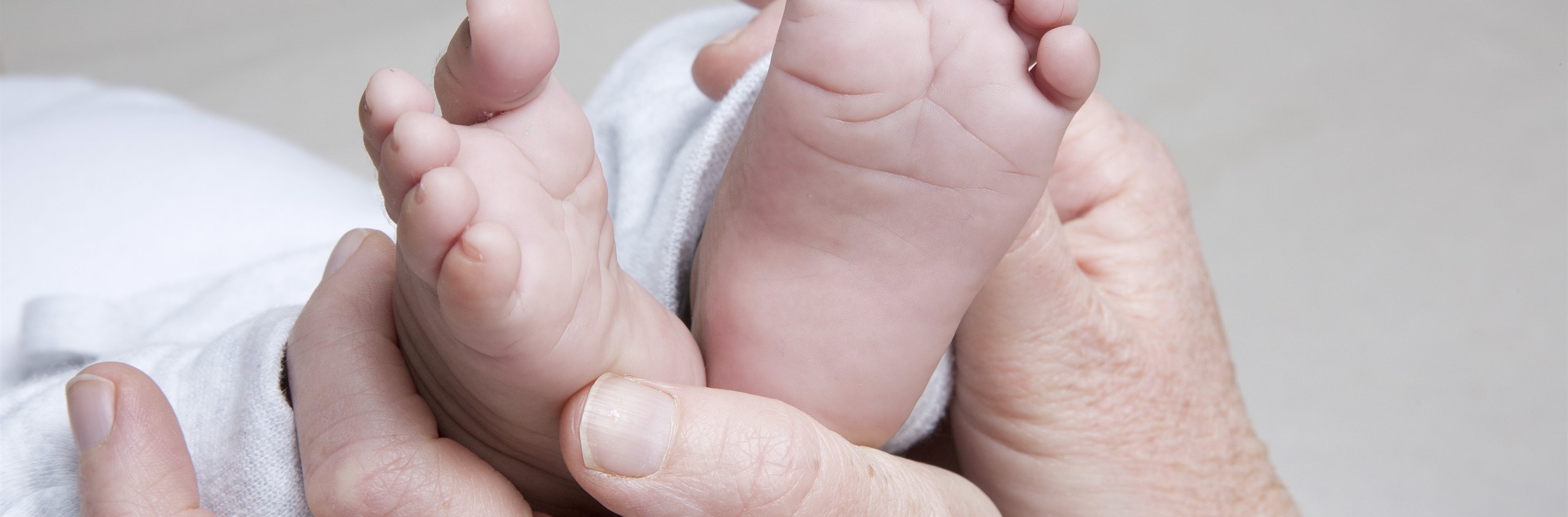
A baby’s acceptance of a practitioner is of critical importance, so special attention must be given to the negotiation of the relational field, contact, and touch. The infant has not come to the session of its own accord but rather its parents or primary caregivers have brought it. We thus have to gain the baby’s permission for the session work. Again, include the baby in all conversations with caregivers, remembering that he or she will be able, at some level, to understand your words. Introduce yourself to the baby. Explain what is happening and describe your intentions, as infants will understand all this in their own way. In addition to verbal communication, your quality of presence is paramount; the slowness of approach and a gentle touch and clarity of intention help develop the baby’s trust and anticipation. The infant must sense our integrity, full attention and communication skills. Sincere enjoyment of being with babies is also an essential support in creating a trusting relationship.
Negotiation of boundaries with an infant is quite different from creating a relationship with an adult. The world of the prenate and infant is totally unified. They perceive and sense everything all at once, in present time. All input has equal weight and intense input — like a contact made too quickly or your loud voice — can be overwhelming. It is important to respect this when approaching infants.
Furthermore, their world is undifferentiated from their mom’s world. They are truly a unified field of consciousness. Their physical and psycho-emotional world is not separate from their mom’s or primary caregiver’s presence. So approaching the baby means approaching mom, dad, and any caregivers present, and vice versa. If trust is well established in the whole family field, the baby will gradually recognise the practitioner as part of the whole family system.
References
- Verny, T. (1981) The Secret Life of the Unborn Child, Summit Books Chamberlain, D. (1998) The Mind of Your Newborn Baby, North Atlantic Books. Kinsella MT, Monk C. Impact of maternal stress, depression & anxiety on fetal neurobehavioral development. Clin Obstet Gynecol. 2009 Sep;52(3):425-40. doi: .1097/GRF.0b013e3181b52df1. PMID: 19661759; PMCID: PMC3710585.
- Eichhorn, N. (2012). Maternal Fetal Attachment: Can Acceptance of Fetal Sentience Impact the Maternal-Fetal Attachment Relationship? Journal of Prenatal and Perinatal Psychology and Health, 27, 47.
- Sills, F (2008) Being and Becoming, North Atlantic Books
- Castellino (1998) Somatotropic Facilitation of Prenatal and Birth Trauma, paper received from Castillino.
- Emerson, W.R. (1998). Birth Trauma: The Psychological Effects of Obstetrical Interventions. Handbook of Prenatal & Perinatal Psychology. P2: Babies’ Ability to Attune and Respond to Caregivers
Biography
Franklyn Sills is a pioneer in the development of Craniosacral Biodynamics and Core Process Psychotherapy. He extensively studied with and assisted one of the pioneers of pre- and perinatal psychology, Dr William Emerson PhD and held a weekly baby clinic for many years, which proved formative in his approach to working with pre and perinatal infants. He is the author of “Foundations in Craniosacral Biodynamics, volume 1 and 2” and “Being and Becoming, Psychodynamics, Buddhism and the Origins of Selfhood.”
The opinions expressed in this article are those of the author and do not necessarily reflect the viewpoints of the CSTA.