
Dancing with Potency: an ode to Franklyn Sills
BY Katherine Ukleja
The Fulcrum, Issue 97 Winter 2025
In 1992, after a decade in bodywork practice, I arrived at the Karuna Institute. I came as a student on what was then a one-year training in craniosacral therapy and stayed for seventeen years. Under the tutelage of the uniquely-gifted Franklyn Sills I found my home, first as a practitioner and ultimately as a teacher.
On arrival, one of the first things that I remember Franklyn saying was ‘there is suffering and it must be understood’. That made me sit up. My training up till then was about diagnosing and correcting malfunction in the physical body. I had not come prepared for the Buddhist teaching that underpinned the humanistic ethos of Karuna. Yes, I had learned to differentiate and treat sixteen different sacroiliac and iliosacral lesions but not how to meet, let alone help alleviate, another’s suffering.
Franklyn’s teaching was all about ‘relationship’. The relational field, a field of interactive attention, between the practitioner and the client. Yes, of course, we learned about the tide, the primary respiratory mechanism, SBJ patterns and stillpoints. But we were no longer looking at strains and stasis in the tissues and fluids but at individual life history stored in the body and psyche of each person. A left lateral shear was no longer simply a distortion induced by the extreme physical pressure that the baby’s head meets in the birth canal. It was an imprint, a story of physical, emotional, psychological and even spiritual suffering that this little human being had encountered.
Franklyn called his approach ‘craniosacral biodynamics’. He had an exceptionally brilliant mind and a deep understanding of a variety of academic disciplines. His teaching drew on many sources, from classical osteopathy, psychotherapy, neuroscience, biophysics to the ancient wisdom of the Toa Te Ching. In particular, The Tao of Pooh! Over the years that I was at his side he transformed the logos and mythos of craniosacral therapy.
The starting point for this transformation was Sutherland’s insight into the breath of life and its unerring potency. In later life Sutherland shifted his focus away from an analysis and adjustment of subtle biomechanics to a reliance on the inherent forces that facilitate healing. He came to understand that the potency possesses intelligence which makes and carries out healing decisions. And that these decisions, later called ‘the inherent treatment plan’ by Rollin Becker, arise from a depth of stillness. Franklyn took these inspirations further and over time came to delineate several functions of potency which form the bedrock of biodynamic practice.
A lot of new information came from across the water, with Michael Shea acting as emissary. The writings of James Jealous, particularly his understanding of the original matrix and the three bodies, influenced Franklyn’s thinking. Franklyn’s background in polarity therapy meant that he was familiar with what Randolph Stone called ‘pattern energy’ but Jealous’s languaging resonated with him and encouraged originality. The observations of visionary embryologist Erich Blechschmidt, his model of metabolic fields which determine the evolution of form, provided another springboard for broadening the biodynamic concept.
Soon after meeting Peter Levine in the mid 1990s, Franklyn fully digested the new trauma model and incorporated key aspects of somatic experiencing methodology, such as titration, pendulation and attention to micro movements, into practice. He also made an in-depth study of the research papers leading to the establishment of Stephen Porges’ polyvagal theory as well as other advances in neuroscience which flowed from the generously funded Decade of the Brain, in the US. He never cut corners; he delved into the emerging psychobiological model of psycho-neuro-endocrine-immunology. He correlated these findings with how they impact the expression of primary respiration and the functions of potency, converting complex theory into our hands-on practice.
Another huge contribution from Franklyn came from his decades-long friendship and collaboration with William Emerson. Together they forged a new way of describing birth stages, as well as mapping conjunct pathways through the birth canal and their correspondence to classic cranial moulding patterns. Their interpretation went way beyond the physical impacts on the neonate skull. Instead, they illuminated a holistic understanding of pre and perinatal dynamics and how these shape us throughout our lifespan.
Franklyn’s teaching was profound and expansive. A teacher on the grand scale he took listeners out into the cosmos, into the unknowable and beyond the assumed limits of human perception. He taught how to hold the minutest detail of embodied history in a wide-open relational field, the particular in the context of the whole. And he could light the way towards a transcendent state of grace which takes place in the depth of stillness, in the numinous presence of the breath of life.
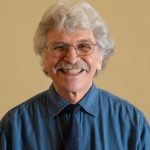 Yet for all his erudition, contributions of thought and creativity, those who knew Franklyn will remember him for his compassion, his undefended heart, his generosity and his capacity for holding human suffering with unquestioning, unconditional acceptance. He was a rare and beautiful being. He will be missed but his wisdom will live on for generations to come.
For myself, I will miss the infinite discourses about the fount of primary respiration, why and how what we do works, what takes place in a state of balance, how our hands connect with potency or where we fit in the healing arts. And I will remember countless shared moments of hilarity and watching Franklyn dance! He was a great dancer.
Frankyn Sills died in 2025 aged 78. He was instrumental in shaping and articulating the work we practise today through his visionary teaching, insightful writings and wise leadership.
The opinions expressed in this article are those of the author and do not necessarily reflect the viewpoints of the CSTA.