Working in the Family Field – Being with ART
BY Sarah Nesling
The Fulcrum, Issue 99 Summer 2026
This article was written specifically for craniosacral therapists, opening questions around some of the conceptual frameworks underlying the subtle energetic beginnings to life. It has been amended slightly here. The material may affect the reader emotionally, if they have experienced challenges with fertility, so please read with caution and consider seeking CST advice/treatment to help process anything that comes up.
The instinct to be parents is primal, well below conscious rational thought. For those unable to conceive naturally, assisted reproductive technology (ART) brings hope and possibility but it can also be a highly-stressful, medicalised process with complex dynamics. My clinical experience of ART leaves me in awe of the resilience I see, with great gratitude to the families that have trusted me to support them, and has raised as many questions as answers.
Many parents experience a sense of failure or stigma at not being able to conceive. Clinical procedures are often depersonalising, involving deeply intimate, private parts of the body. This can initiate protective processes in the parents’ nervous systems, taking them into dissociative states that may need support and that the growing baby must also navigate.
For practitioners, ART is increasingly a part of mother and baby practice, requiring sensitivity, an exploration of our own dynamics and clinical approaches that support safety. Significant changes in gender identity and family structure have also emerged over the 50 years that I have worked with families. The fluidity and variation in family gender roles and reproductive choices at times go hand in hand with ART.
As CST practitioners, our job is to find a way of being present with the health of each family constellation and finding appropriate language. There are firsts for all of us in our practice – the first time we work with a terminally-ill client, someone who has been raped, a same-sex pregnant couple, perhaps using each other’s eggs, siblings of different ages from the same batch of frozen eggs. Perhaps we meet each new constellation by settling into our fulcrums, where assumptions dissolve and we are fully present. Or maybe not! Perhaps we see a mirror of challenging possibilities. There can be judgement or prejudice that may take us by surprise.
In sharing anonymised cases that explore some of the delicate family dynamics we may encounter, I hope to air situations that can be challenging to meet in the moment.
ART Procedures and Techniques
The territory of ART encompasses a range of medical procedures handling eggs and sperm outside the human body to facilitate fertilisation for individuals and couples facing reproductive challenges, from age-related infertility and male factor issues to genetic disorders and same-sex family planning. Common techniques include IVF, intracytoplasmic sperm injection (ICSI) and embryo cryopreservation and third-party ART.
There is so much dense medical language here, not approaching the lived experience: How does your body react as you take this in?
Standard In Vitro Fertilisation (IVF) is a process in which ovaries are stimulated to produce multiple eggs, which are retrieved and fertilised by mixing with sperm in a laboratory before the resulting embryos are transferred to the uterus. It is recommended for blocked fallopian tubes, ovulation disorders or ovarian failure, endometriosis, male factor infertility or genetic disorders and where other methods have not been successful. IVF may utilise a couple’s own eggs and sperm, donor gametes or a gestational carrier/surrogate.
Case One: A couple undergoing IVF for a second baby came to see me. The father described making love to schedule, naming the removal of intimacy and playfulness, the utter numbing and inadequacy he felt as time went by. To my surprise, he felt massive relief when he was able to give up and let technology take over, placing sperm in a sample pot. He dissociated, lost connection with himself and his partner and found it harder to be a father to his first child. He wept openly as he expressed this and reconnected to his feelings, particularly the loss of relationship with his wife. We were able to resource by taking him and her back to how they met, what drew them together, how they felt then and at the birth of their little girl. They took up a referral for couples’ therapy.
IVF commonly involves hyper-stimulation of the ovaries to produce multiple eggs, before retrieval, fertilisation and transferring one or more embryos into the uterus. Egg retrieval can be painful, intrusive and stressful: How many eggs? How do they look? Women may experience tremendous mood effects – like PMT on steroids – and I once had a client take a knife to her husband.
This period is a sensitive and valuable window for CST work: as eggs are ripening, hormones are raging and epigenetic activity is surging, any connection to stillness is helpful. However, as a practitioner one needs to be mindful of the risk of miscarriage and possible blame. How would you feel if a client asked for treatment at a particularly vulnerable stage of pregnancy?
The work of cell biologist Bruce Lipton teaches us that the epigenetic expression of sperm and egg is malleable, reflecting the environment into which the being will be born in the weeks leading up to conception. There is fluidity and reciprocity between environment and conceptus. Reverence and beauty permeate these teachings and Lipton calls for pregnancy to be seen as sacred.¹
Case Two: Sylvia’s husband had undergone cancer treatment and his sperm collected for cryopreservation before chemotherapy. As I negotiated contact with her pelvis and came into relationship with her uterus, she described her experience of egg collection and it became apparent that the manner of the clinician and the environment brought up memories of difficult gynaecological examinations as a teenager at an STD clinic. Sylvia realised how much of the egg retrieval had been unnegotiated, requiring a disconnect from precious parts of herself. This realisation enabled her to seek out a clinic with a level of sensitivity that suited her better.
As we know, agency and choice can be critical in navigating out of dissociative states and negotiation skills can be transformative and empowering in supporting this repair. We spent time in each subsequent session encouraging a sense of the sacred in Sylvia’s uterus, visualising a rich, welcoming nest to receive the fertilised eggs. We worked around establishing a holding field for the harvested eggs and the sperm as they were brought together. The clinic was happy to allow them to see the space where this would take place and a picture of the couple was present during fertilisation. They found a sense of empowerment in creating a loving field for the potential soul coming in. I still treat the very sensitive eight-year-old conceived that night and his little sister, born three years later following a natural conception.
Intracytoplasmic Sperm Injection (ICSI) is a fertilisation technique in which a single sperm is manually selected and injected directly into a mature egg. It is performed as part of IVF cycles in cases of severe male infertility, such as low sperm count, poor motility, poor morphology or when sperm must be surgically retrieved.
Case Three: I have a long-term client, Magdalena, who underwent several years of natural cycle IVF, eventually becoming pregnant via ICSI. I was contacted after she gave birth at 30 weeks to Rose, who was in an incubator. I could not work in the NICU, so I treated Mags at home between hospital visits. The history was difficult: her waters had broken at 19 weeks and she was told she had to terminate. She found another obstetrician who supported her to do what she instinctively felt – to rest, drink water and believe her baby was well.
I worked in all the usual ways with an overstrained nervous system, slowing the history down and being with emotion, particularly fury towards the first obstetrician. On the couch, I oriented to the brain stem, adrenals, and autonomic regulation and to the midline arising from the perineum. Magdalena was well resourced, particularly by her spiritual practice and felt held in that. We met weekly and, when Rose came home, weekly home visits continued. There were concerns as to whether Rose could see or hear and many developmental scares. Magdalena navigated this with the same belief in the health of her baby. It was a masterclass in “Health”. Rose is now nine; she has recently been experiencing severe separation anxiety and I continue to support her mother, who has bouts of fatigue.
Most of us, during our CST training and personal work, have been touched by the field of pre- and perinatal therapy. Perhaps we have been guided through deep experiences of conception, the rolling down the fallopian tubes and implantation and have explored these dynamics in our personal work.
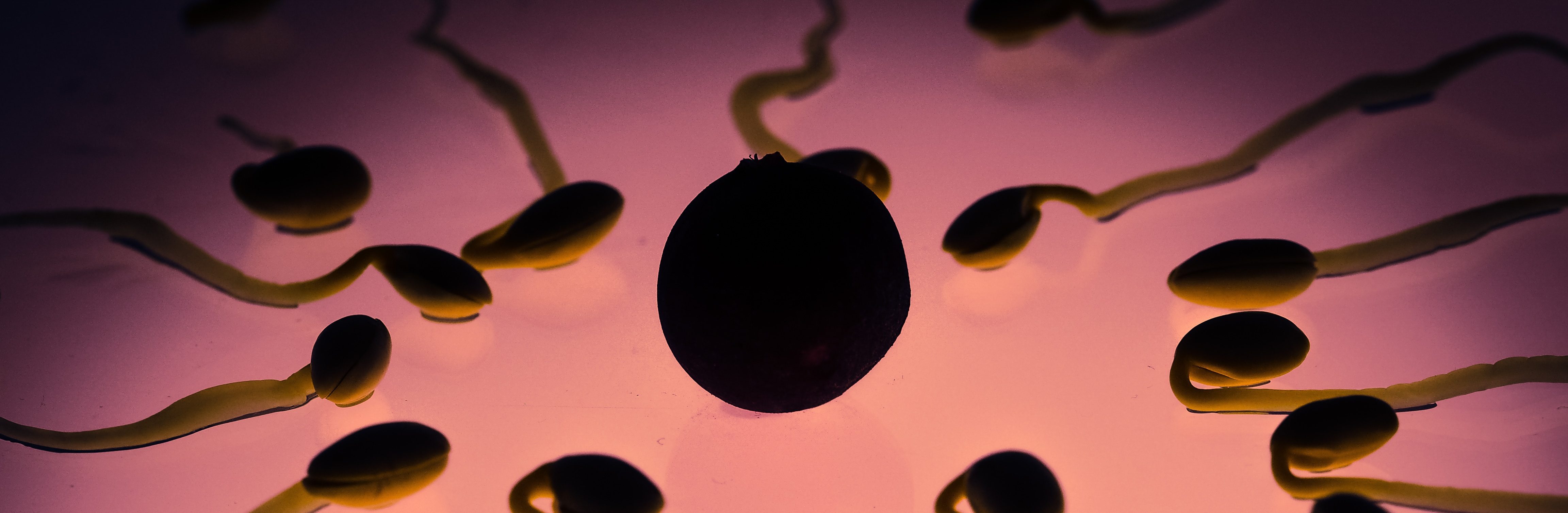
We may also have looked at conception through the eyes of embryologist Jaap van der Waal, who describes a mutual biochemical / energetic dialogue in which one sperm is invited inside the egg, aided by the presence of all the other sperm. He coined the term pre-attraction complex, referring to the huge egg cell with many sperm cells working around the corona radiata, burrowing into the zona pellucida with their waving tails radiating outwards like sunrays. He describes the whole complex rotating slowly, perhaps for several hours, followed by stillness.²
In the teachings of Dr James Jealous and Franklyn Sills, we learn that at conception there is an ignition, the quantum midline arises and an ordering field or matrix is generated around a core of dynamic stillness.
Moving back to the exploration of technology around conception, how do we feel about ICSI? Perhaps a subtle contraction or an emotional tone. How does this idealised dance between sperm and egg contrast with the medicalised environment of conception outside the body? How do we balance an ideal with life’s conditions and challenges and orient to health, stillness and the possibilities always present?
Questions have been raised about the element of choice of egg and sperm and whether the injection of sperm results in disruption to the optimal position of the arising midline.
If you work with mothers and babies, you will be familiar with the impacts of the birth process, of family dynamics and how they often evoke issues in you. How do we sit with conception? Are these ideas and questions present subtly in the room with a pregnant woman? If the moment of conception and the arising stillness are seen as essential to the ongoing maintenance of form and function, what about those conceptions outside the environment of the womb? Can we know there is nothing to correct, nothing missing, just potential?
How can we support the mother to create the best environment for conception and the baby’s development as they grow together? This may be as simple as supporting her body through stress manifestations such as backache as the spine shifts or, if invited, something deeper. In pregnancy, the foetus’s midline will organise in relation to the mother’s so we can offer support to her midline and be present for the whole emerging family system.
Klaus Kapelli noted: “You can artificially create the circumstances for fertilisation but you cannot force a soul to incarnate. A soul will choose its own path into the world.”³ Can we orient to health and possibility, honouring the determination, vitality and desire to experience life that led the soul to incarnate in this way?
Egg/Embryo Cryoperservation is the process of freezing eggs or fertilised embryos for later use, allowing individuals to preserve fertility for age-related, medical (such as pre-chemotherapy) or social reasons.
This, for me, has taken longer to settle with. I have worked with many infants from frozen eggs or who were frozen as embryos and it does not come into my palpation as anything different – but it has bothered my being. What is it for me about the freezing process? Does it resonate with my own freeze patterns? We may not know where resonance arises but it is important to acknowledge it or we may project it onto clients who are making very challenging decisions.
Third-party ART involves using donor sperm or eggs, embryos or gestational surrogates to achieve pregnancy when traditional IVF fails or is not possible.
The use of donor sperm has been around for a long time. I have worked with many families with two children from the same sperm donor where the father has fertility issues. There have been concerns and implications around unknown siblings particularly when this technology was first offered. At its simplest, many same-sex female couples use this method and artificial insemination may sometimes be managed in the intimacy of the couple’s home if the donor is a friend. Nevertheless, complexity deepens and challenging dynamics may emerge in family structures involving donor eggs and surrogacy.
Case Four: A lesbian couple I was treating through two failed IVF attempts and one miscarriage came in to tell me the third IVF cycle had worked. Love filled the room like the corona radiata and a deep stillness permeated the room. In this case, alongside CST for both women to support nervous system regulation through two failed attempts and one miscarriage, we created rituals to foster connection to each other, the donor sperm, the egg and the potential conceptus. The little bit of loveliness helped alongside the hands-on work. Joy and love are powerful down-regulators.
The Neuroception of Safety
We are familiar with Stephen Porges’s work and how, in extreme stress, the body enters a parasympathetic state of immobilisation. Porges also describes immobilisation with safety as the state for lovemaking and intimate social connections. Many women undergoing ART describe the need to disconnect from their bodies and emotions for months, sometimes years, and a change in their enjoyment of intimacy and what it used to be. The deepening into the body with CST can support a remembering.
We know ART often generates stress and possibly freeze in the mother’s system and what mum feels, baby feels. There is bidirectional communication through the placenta, affecting the epigenetic expression of the developing baby. Many pregnant women know this intuitively and seek help to reconnect to themselves and their baby. Our skills in autonomic regulation – encouraging rest states and being in the body – can be so helpful here.
In her well-researched and heartfelt book, Ann Diamond Weinstein shares how traumatic stress shapes maternal experience, affecting both ANS development and gene expression in the baby. Ann highlights the implications for professional practitioners and the need for them to regulate their own physiology, so that female clients do not have the added dimension of dysregulated, disconnected, sometimes harsh treatment. She calls for, in Porges’s framework, the neuroception of safety in the clinical space.4
As we meet the many complex family structures now coming into clinic, it is helpful if we have processed some of the dissonance between our ideals of healthy conception, of what a family should be and the wonder of each new life. This is especially relevant where this potent material may resonate or contrast with our own experience of fertility. Having been deeply enmeshed in this material while writing I return to knowing that we are all malleable, adaptable and resilient however we come in and that each life expresses its challenges in unique ways as part of its journey.
Let’s dream of a future where fertility clinics might refer to specialist craniosacral clinics that support women and families in all aspects of pregnancy, with multidisciplinary approaches alongside CST, supporting the sacred, the beauty, the messiness and the love.
References
1) Lipton, B. (2011) The Biology of Belief: Unleashing the Power of Consciousness, Matter and Miracles. Hay House UK
2) Jaap van der Waal in Talbott, S. L. (2013) The Embryo’s Eloquent Form,The Journal of Prenatal and Perinatal Psychology
3) Dr. Thomas R. Verny. Test Tube Babies Remember with Klaus Kappeli https://www.youtube.com/watch?v=g2Tfi_jiPxI
4) Weinstein, A.D. (2016) Prenatal Development and Parents Lived Experiences. WW Norton & Company
Fertility rewritten: how modern science and women are changing the narrative
Further reading
Verny, T. (1981) The Secret Life of the Unborn Child. Summit Books
Sills, F. 2012 Foundations in Craniosacral Biodynamics Vol 2. North Atlantic Books
Porges,S. (2011) The Polyvagal Theory: Neurophysiological Foundatons of Emotions, Attachment, Communication, and Self-Regulation. W. W. Norton & Co
Sarah Nesling has been a craniosacral therapist for 35 years and ran a low-cost mother and baby clinic for many years. An experienced teacher of anatomy and CST she runs the teaching platform Still Learning and is a supervisor for CSTA.
For more details see sarahnesling.co.uk
The opinions expressed in this article are those of the authors and do not necessarily reflect the viewpoints of the CSTA.